 01 / Caddie note
Read the whole lane
Find the flag, hazards, gates, and one safe stopping point before shooting.
Free online / Surreal mini golf
Aim a square cat through strange fairways where solid geometry hides beneath water, sand, walls, meme props, and increasingly unreasonable scenery.






Course admission / 01
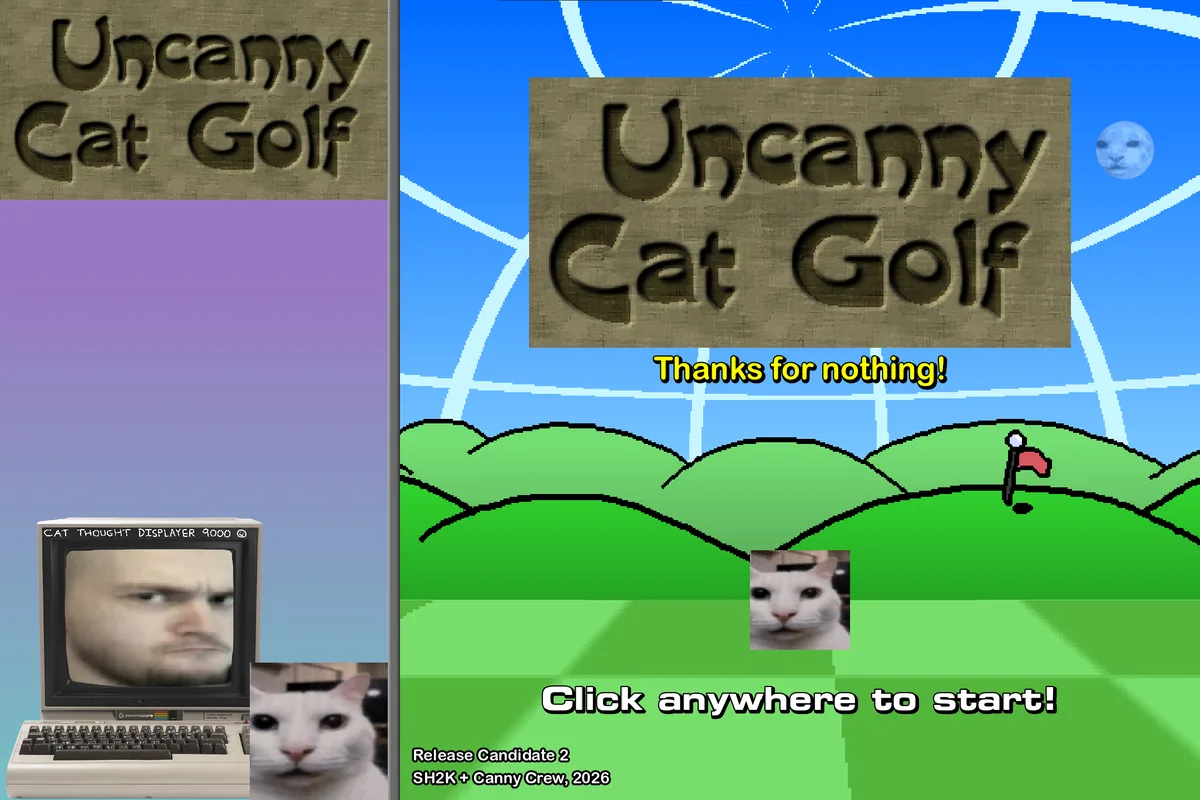
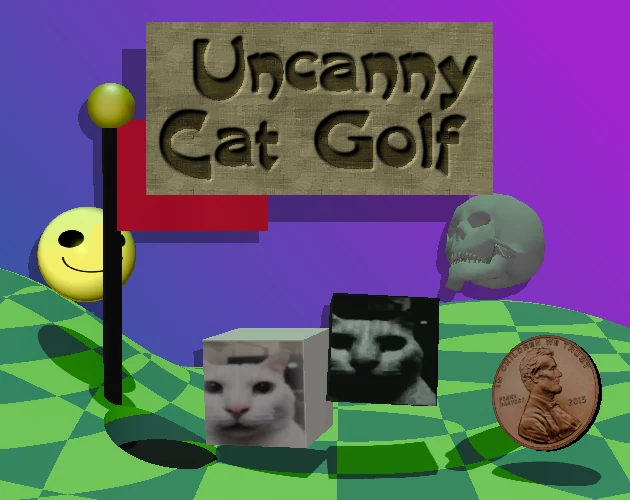
Uncanny Cat Golf keeps the traditional mini-golf promise of reaching the cup in as few strokes as possible, then makes the ball a square cat and decorates the fairway like an internet collage escaped into a sports hall. The contrast works because the joke never erases the rules. Angle, force, momentum, walls, hazards, score, and par remain readable enough to support deliberate improvement.
This edition uses the same night-blue carnival shell as the rest of Frankie's Fun House. The game frame stays above the fold, the shared attraction shelf remains directly below it, and the guide approaches each hole as a midway mechanism: strange on the surface, consistent once you learn where the moving parts are.
01 / Caddie noteFind the flag, hazards, gates, and one safe stopping point before shooting.
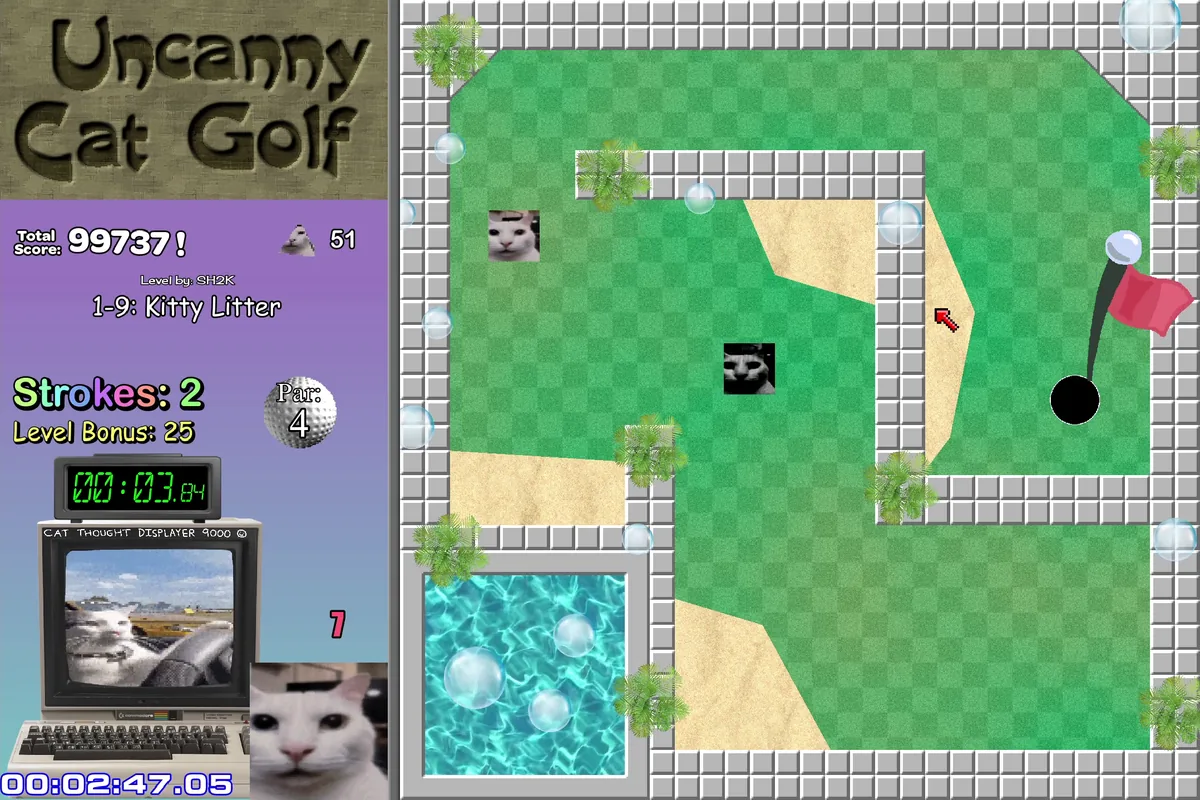 02 / Caddie note
Enough speed is useful; extra speed usually becomes recovery work.
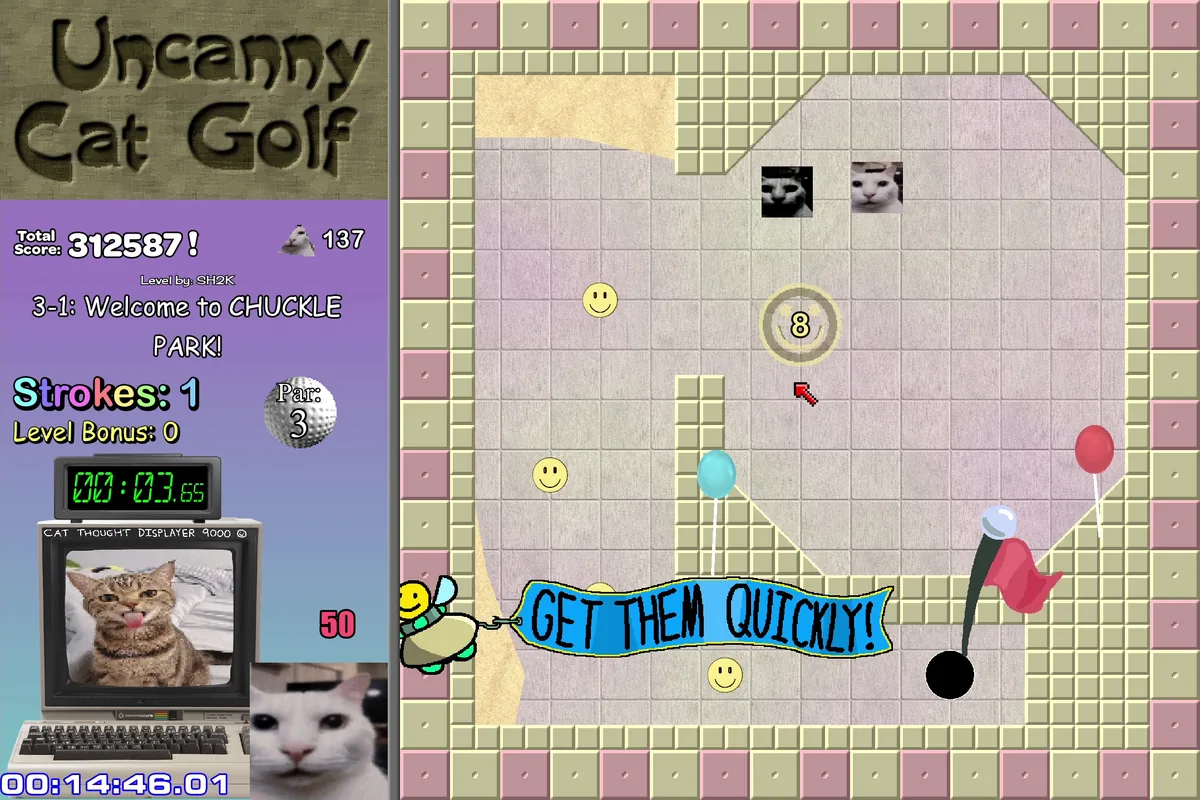 03 / Caddie note
Large flat surfaces provide more predictable rebounds than tiny props.
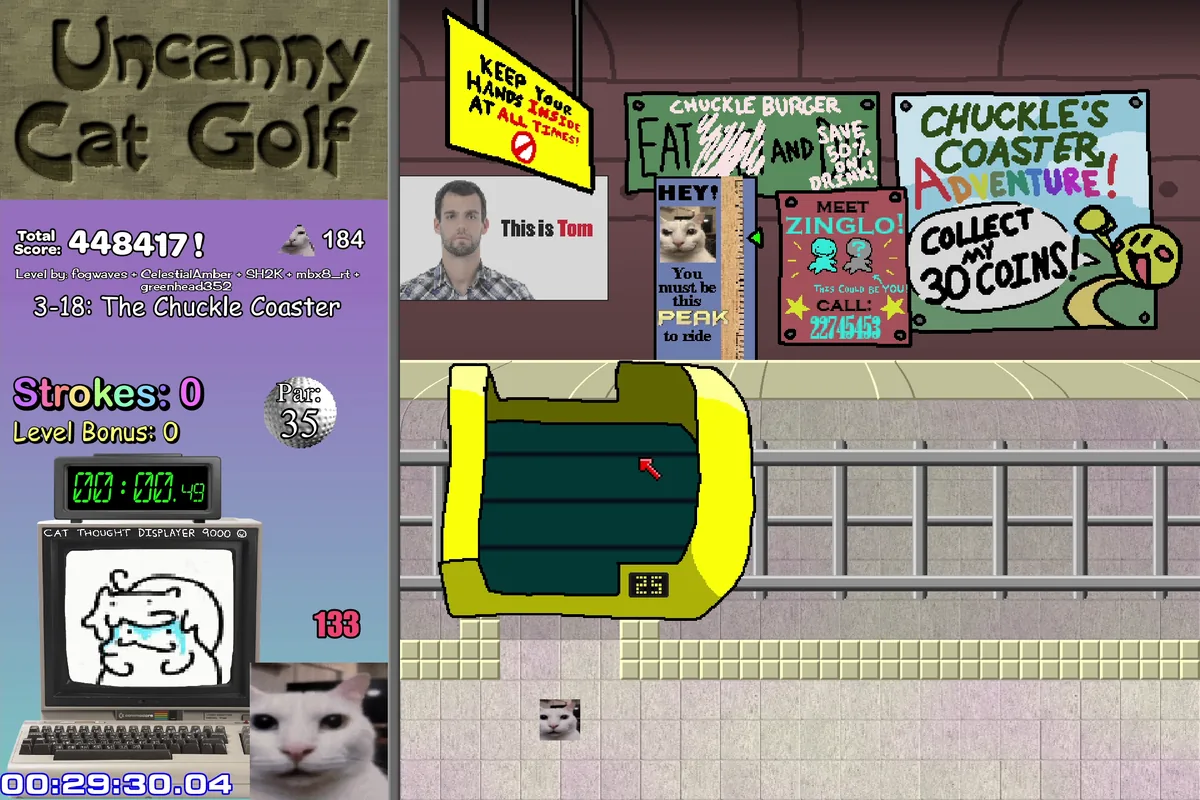 04 / Caddie note
A setup stroke with an open view can beat an ambitious shortcut.
Course gallery / 02
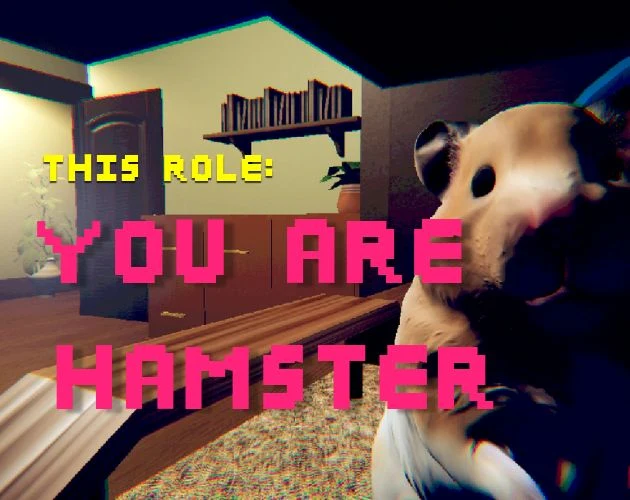
Every theme changes the visual noise while preserving walls, hazards, routes, and a final flag.
Screening tent / 03
Use the videos for timing and course context, then return to the browser frame to control the shot yourself.
The attraction guide / 04
Uncanny Cat Golf builds its challenge around how a square mascot becomes trustworthy sporting equipment after a few consistent rebounds. The presentation behaves like a carnival booth assembled from several eras of the internet: a serious score display shares the screen with a square cat, bright turf, water, sand, faces, signs, and objects that look as if they wandered in from another attraction. Beneath that collage, however, the course remains honest about position. Every shot begins somewhere, travels along an angle with a chosen force, collides with surfaces, loses momentum, and stops in a place that either helps or complicates the next attempt.
A practical caddie rule is to watch the first strokes as calibration rather than demanding a perfect score. Trace the hole backward from the flag and divide the route into places where the cat can settle without touching a hazard or entering a dead corner. This changes the goal from one heroic launch into a sequence of smaller promises. The shortest line can demand a perfect gate, a dangerous water crossing, or a rebound from a tiny object. A wider path using a large wall may add an intentional setup stroke while removing three accidental recovery strokes.
Frankie's Fun House frames this lesson like an attraction operator explaining a difficult booth: enjoy the spectacle, but notice where the mechanism is fair. The scenery wants a reaction, while the scorecard wants consistency. Finish a hole before chasing par, then compare one angle or power adjustment at a time. When a miss happens, let the cat settle and read the evidence. Distance reveals force, rebound reveals contact, and final position reveals whether the route protected the following shot. That approach keeps the joke alive without letting the joke control the score.
The game builds its challenge around how the full fairway reveals gates, hazards, banks, and decorations that only pretend to matter. The presentation behaves like a carnival booth assembled from several eras of the internet: a serious score display shares the screen with a square cat, bright turf, water, sand, faces, signs, and objects that look as if they wandered in from another attraction. Beneath that collage, however, the course remains honest about position. Every shot begins somewhere, travels along an angle with a chosen force, collides with surfaces, loses momentum, and stops in a place that either helps or complicates the next attempt.
A practical caddie rule is to scan from flag to cat and mark one safe stopping point. Trace the hole backward from the flag and divide the route into places where the cat can settle without touching a hazard or entering a dead corner. This changes the goal from one heroic launch into a sequence of smaller promises. The shortest line can demand a perfect gate, a dangerous water crossing, or a rebound from a tiny object. A wider path using a large wall may add an intentional setup stroke while removing three accidental recovery strokes.
Frankie's Fun House frames this lesson like an attraction operator explaining a difficult booth: enjoy the spectacle, but notice where the mechanism is fair. The scenery wants a reaction, while the scorecard wants consistency. Finish a hole before chasing par, then compare one angle or power adjustment at a time. When a miss happens, let the cat settle and read the evidence. Distance reveals force, rebound reveals contact, and final position reveals whether the route protected the following shot. That approach keeps the joke alive without letting the joke control the score.
The game builds its challenge around why maximum force produces a satisfying spectacle while quietly creating expensive recovery work. The presentation behaves like a carnival booth assembled from several eras of the internet: a serious score display shares the screen with a square cat, bright turf, water, sand, faces, signs, and objects that look as if they wandered in from another attraction. Beneath that collage, however, the course remains honest about position. Every shot begins somewhere, travels along an angle with a chosen force, collides with surfaces, loses momentum, and stops in a place that either helps or complicates the next attempt.
A practical caddie rule is to choose enough speed to reach the next useful zone and no more. Trace the hole backward from the flag and divide the route into places where the cat can settle without touching a hazard or entering a dead corner. This changes the goal from one heroic launch into a sequence of smaller promises. The shortest line can demand a perfect gate, a dangerous water crossing, or a rebound from a tiny object. A wider path using a large wall may add an intentional setup stroke while removing three accidental recovery strokes.
Frankie's Fun House frames this lesson like an attraction operator explaining a difficult booth: enjoy the spectacle, but notice where the mechanism is fair. The scenery wants a reaction, while the scorecard wants consistency. Finish a hole before chasing par, then compare one angle or power adjustment at a time. When a miss happens, let the cat settle and read the evidence. Distance reveals force, rebound reveals contact, and final position reveals whether the route protected the following shot. That approach keeps the joke alive without letting the joke control the score.
The game builds its challenge around how broad boundaries can turn a blocked route into a predictable bank shot. The presentation behaves like a carnival booth assembled from several eras of the internet: a serious score display shares the screen with a square cat, bright turf, water, sand, faces, signs, and objects that look as if they wandered in from another attraction. Beneath that collage, however, the course remains honest about position. Every shot begins somewhere, travels along an angle with a chosen force, collides with surfaces, loses momentum, and stops in a place that either helps or complicates the next attempt.
A practical caddie rule is to plan the exit angle first and work backward to the wall contact. Trace the hole backward from the flag and divide the route into places where the cat can settle without touching a hazard or entering a dead corner. This changes the goal from one heroic launch into a sequence of smaller promises. The shortest line can demand a perfect gate, a dangerous water crossing, or a rebound from a tiny object. A wider path using a large wall may add an intentional setup stroke while removing three accidental recovery strokes.
Frankie's Fun House frames this lesson like an attraction operator explaining a difficult booth: enjoy the spectacle, but notice where the mechanism is fair. The scenery wants a reaction, while the scorecard wants consistency. Finish a hole before chasing par, then compare one angle or power adjustment at a time. When a miss happens, let the cat settle and read the evidence. Distance reveals force, rebound reveals contact, and final position reveals whether the route protected the following shot. That approach keeps the joke alive without letting the joke control the score.
The game builds its challenge around why water, sand, narrow corners, and moving clutter punish optimism more than patience. The presentation behaves like a carnival booth assembled from several eras of the internet: a serious score display shares the screen with a square cat, bright turf, water, sand, faces, signs, and objects that look as if they wandered in from another attraction. Beneath that collage, however, the course remains honest about position. Every shot begins somewhere, travels along an angle with a chosen force, collides with surfaces, loses momentum, and stops in a place that either helps or complicates the next attempt.
A practical caddie rule is to lower force near a boundary and preserve an open route for the following putt. Trace the hole backward from the flag and divide the route into places where the cat can settle without touching a hazard or entering a dead corner. This changes the goal from one heroic launch into a sequence of smaller promises. The shortest line can demand a perfect gate, a dangerous water crossing, or a rebound from a tiny object. A wider path using a large wall may add an intentional setup stroke while removing three accidental recovery strokes.
Frankie's Fun House frames this lesson like an attraction operator explaining a difficult booth: enjoy the spectacle, but notice where the mechanism is fair. The scenery wants a reaction, while the scorecard wants consistency. Finish a hole before chasing par, then compare one angle or power adjustment at a time. When a miss happens, let the cat settle and read the evidence. Distance reveals force, rebound reveals contact, and final position reveals whether the route protected the following shot. That approach keeps the joke alive without letting the joke control the score.
The game builds its challenge around how mazes, parks, coaster-like corridors, monitors, balloons, and strange faces refresh attention. The presentation behaves like a carnival booth assembled from several eras of the internet: a serious score display shares the screen with a square cat, bright turf, water, sand, faces, signs, and objects that look as if they wandered in from another attraction. Beneath that collage, however, the course remains honest about position. Every shot begins somewhere, travels along an angle with a chosen force, collides with surfaces, loses momentum, and stops in a place that either helps or complicates the next attempt.
A practical caddie rule is to classify functional surfaces before reacting to the visual joke. Trace the hole backward from the flag and divide the route into places where the cat can settle without touching a hazard or entering a dead corner. This changes the goal from one heroic launch into a sequence of smaller promises. The shortest line can demand a perfect gate, a dangerous water crossing, or a rebound from a tiny object. A wider path using a large wall may add an intentional setup stroke while removing three accidental recovery strokes.
Frankie's Fun House frames this lesson like an attraction operator explaining a difficult booth: enjoy the spectacle, but notice where the mechanism is fair. The scenery wants a reaction, while the scorecard wants consistency. Finish a hole before chasing par, then compare one angle or power adjustment at a time. When a miss happens, let the cat settle and read the evidence. Distance reveals force, rebound reveals contact, and final position reveals whether the route protected the following shot. That approach keeps the joke alive without letting the joke control the score.
The game builds its challenge around how distance, rebound, and final position reveal exactly what the next shot should change. The presentation behaves like a carnival booth assembled from several eras of the internet: a serious score display shares the screen with a square cat, bright turf, water, sand, faces, signs, and objects that look as if they wandered in from another attraction. Beneath that collage, however, the course remains honest about position. Every shot begins somewhere, travels along an angle with a chosen force, collides with surfaces, loses momentum, and stops in a place that either helps or complicates the next attempt.
A practical caddie rule is to adjust one variable at a time so the result remains comparable. Trace the hole backward from the flag and divide the route into places where the cat can settle without touching a hazard or entering a dead corner. This changes the goal from one heroic launch into a sequence of smaller promises. The shortest line can demand a perfect gate, a dangerous water crossing, or a rebound from a tiny object. A wider path using a large wall may add an intentional setup stroke while removing three accidental recovery strokes.
Frankie's Fun House frames this lesson like an attraction operator explaining a difficult booth: enjoy the spectacle, but notice where the mechanism is fair. The scenery wants a reaction, while the scorecard wants consistency. Finish a hole before chasing par, then compare one angle or power adjustment at a time. When a miss happens, let the cat settle and read the evidence. Distance reveals force, rebound reveals contact, and final position reveals whether the route protected the following shot. That approach keeps the joke alive without letting the joke control the score.
The game builds its challenge around how a high-stroke hole becomes satisfying when one calmer route replaces random retries. The presentation behaves like a carnival booth assembled from several eras of the internet: a serious score display shares the screen with a square cat, bright turf, water, sand, faces, signs, and objects that look as if they wandered in from another attraction. Beneath that collage, however, the course remains honest about position. Every shot begins somewhere, travels along an angle with a chosen force, collides with surfaces, loses momentum, and stops in a place that either helps or complicates the next attempt.
A practical caddie rule is to record the opening plan and worst recovery before testing a new first shot. Trace the hole backward from the flag and divide the route into places where the cat can settle without touching a hazard or entering a dead corner. This changes the goal from one heroic launch into a sequence of smaller promises. The shortest line can demand a perfect gate, a dangerous water crossing, or a rebound from a tiny object. A wider path using a large wall may add an intentional setup stroke while removing three accidental recovery strokes.
Frankie's Fun House frames this lesson like an attraction operator explaining a difficult booth: enjoy the spectacle, but notice where the mechanism is fair. The scenery wants a reaction, while the scorecard wants consistency. Finish a hole before chasing par, then compare one angle or power adjustment at a time. When a miss happens, let the cat settle and read the evidence. Distance reveals force, rebound reveals contact, and final position reveals whether the route protected the following shot. That approach keeps the joke alive without letting the joke control the score.
Questions and answers / 05
Practical answers about controls, banks, mobile play, loading, saves, and course tone.
It is a surreal browser mini-golf game where a square cat replaces the ball and strange collage-style courses surround familiar aim, power, bank, hazard, stroke, and par rules.
Yes. Press the launch button to load the embedded browser edition from s.uncannycatgolf.org without installing a separate package.
Use a mouse or trackpad to choose the direction and force. Click inside the game frame first if it does not receive input.
Read the whole course, choose a safe stopping point, and create a clean second shot instead of demanding a hole-in-one.
Yes. Broad flat walls are useful, predictable banks when the direct route is blocked or too close to a hazard.
It may run in a current mobile browser, but landscape orientation and desktop fullscreen make precise aiming easier.
Wait for remote assets, click inside the iframe, refresh once, and check privacy extensions or networks that block scripts and embedded games.
They may use browser storage, so private mode, clearing site data, changing profiles, or switching devices can remove progress.
It is primarily absurd comedy mini golf. It contains uncanny faces and flashing meme-style imagery, but the supplied public screenshots are not graphic.