 01 / Desk note
Aim against the route
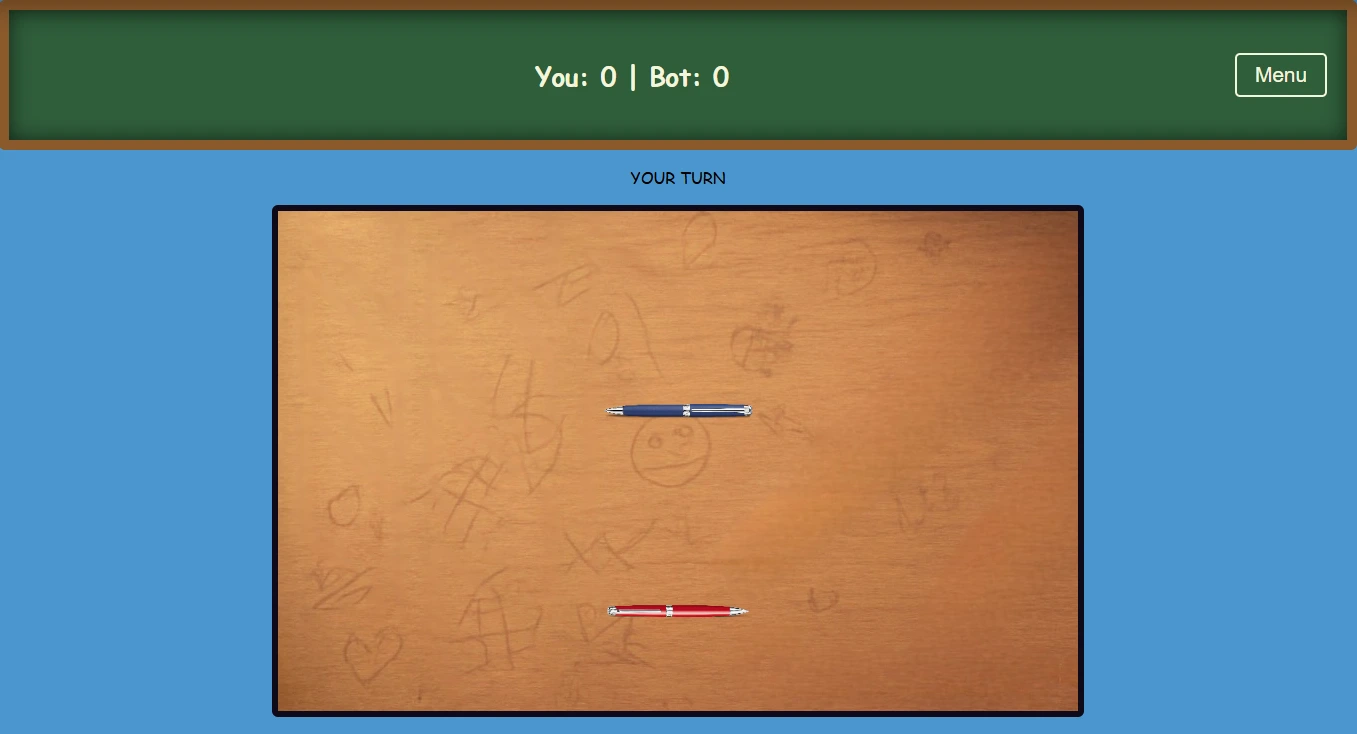
Pull opposite the intended launch and match the guide with a controlled amount of force.
Free online / Desk physics
Pull backward, release controlled force, pressure the blue opponent, and keep the red pen on the desk.








Desk attraction / 01
Pen Fight turns a familiar desk challenge into a readable browser physics duel against a blue computer opponent.
This Fun House edition frames every launch as an attraction trick with a hidden safety rule: the best collision is the one that leaves the red pen ready for another controlled move.
01 / Desk notePull opposite the intended launch and match the guide with a controlled amount of force.
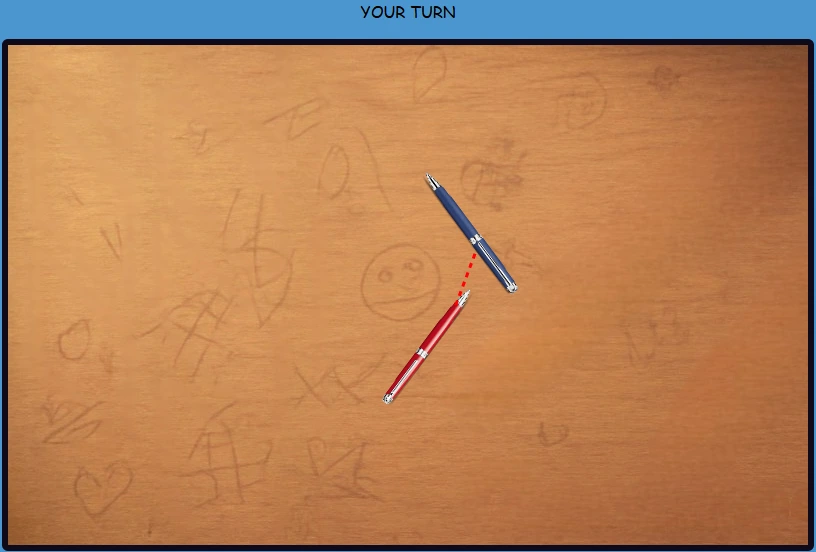 02 / Desk note
Contact is only the midpoint; friction and recoil decide the board that remains.
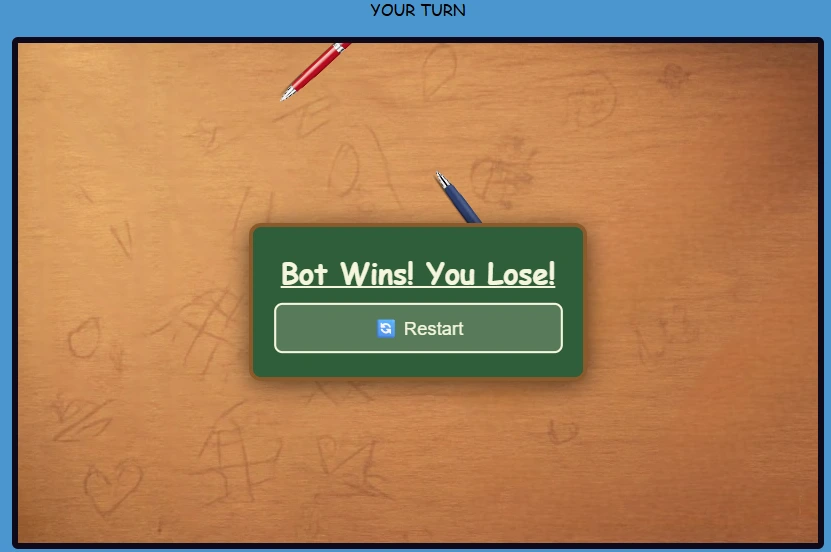 03 / Desk note
Keep the red pen central while making the blue pen spend its boundary margin.
Arena gallery / 02
The verified images show reverse aiming, direct contact, and the positional margin that separates pressure from self-elimination.
Screening booth / 03
These two supplied videos demonstrate the reverse-drag control, collision timing, and pressure near the desk edge.
Watch the complete movement settle before comparing power, direction, recoil, and the next available angle.
Watch the complete movement settle before comparing power, direction, recoil, and the next available angle.
Attraction manual / 04
Pen Fight turns a familiar work surface becomes a complete attraction once the edge can eliminate either contestant. The props are deliberately simple: one red pen belongs to the player, one blue pen belongs to the computer opponent, and the desktop supplies the boundary. That simplicity makes every physical consequence visible. Starting position defines the available lanes, the drag establishes force and direction, friction shapes the slide, contact transfers momentum, and the edge converts a small mistake into a lost round. The attraction is easy to enter because the objective is obvious, but dependable results require the player to think beyond the first impact.
A practical Fun House rule is to mark the safest central landing before touching the red pen. Do not rate a turn by noise, speed, or the distance traveled at the instant of collision. Rate it after both pens have settled. A useful shot moves the blue opponent closer to danger while leaving the red pen with central space and another readable angle. An uncontrolled shot can look spectacular and still create a worse board. Moderate force often produces more total pressure because it preserves the ability to make a second accurate launch instead of demanding a desperate recovery from the boundary.
During the first rounds, use the broad center like a safety rail and let the blue pen become uncomfortable first. This turns replay into a controlled rehearsal rather than random desk chaos. Pen Fight remains a quick physics game, but the score inside each exchange is positional: available angles, distance from the edge, predictable recoil, and the amount of momentum the next move can safely spend. The player who protects those resources can make the final push look simple because the earlier turns already removed the opponent's options.
The game turns the reverse-drag gesture stores force for travel in the opposite direction. The props are deliberately simple: one red pen belongs to the player, one blue pen belongs to the computer opponent, and the desktop supplies the boundary. That simplicity makes every physical consequence visible. Starting position defines the available lanes, the drag establishes force and direction, friction shapes the slide, contact transfers momentum, and the edge converts a small mistake into a lost round. The attraction is easy to enter because the objective is obvious, but dependable results require the player to think beyond the first impact.
A practical Fun House rule is to move the pointer slowly until the guide, power, and intended lane agree. Do not rate a turn by noise, speed, or the distance traveled at the instant of collision. Rate it after both pens have settled. A useful shot moves the blue opponent closer to danger while leaving the red pen with central space and another readable angle. An uncontrolled shot can look spectacular and still create a worse board. Moderate force often produces more total pressure because it preserves the ability to make a second accurate launch instead of demanding a desperate recovery from the boundary.
When a launch fails, preserve the parts that worked and adjust either direction or pull distance, never both at once. This turns replay into a controlled rehearsal rather than random desk chaos. Pen Fight remains a quick physics game, but the score inside each exchange is positional: available angles, distance from the edge, predictable recoil, and the amount of momentum the next move can safely spend. The player who protects those resources can make the final push look simple because the earlier turns already removed the opponent's options.
The game turns contact transfers momentum but friction and recoil decide the positions left for the next exchange. The props are deliberately simple: one red pen belongs to the player, one blue pen belongs to the computer opponent, and the desktop supplies the boundary. That simplicity makes every physical consequence visible. Starting position defines the available lanes, the drag establishes force and direction, friction shapes the slide, contact transfers momentum, and the edge converts a small mistake into a lost round. The attraction is easy to enter because the objective is obvious, but dependable results require the player to think beyond the first impact.
A practical Fun House rule is to wait until both pens stop before judging whether the hit helped. Do not rate a turn by noise, speed, or the distance traveled at the instant of collision. Rate it after both pens have settled. A useful shot moves the blue opponent closer to danger while leaving the red pen with central space and another readable angle. An uncontrolled shot can look spectacular and still create a worse board. Moderate force often produces more total pressure because it preserves the ability to make a second accurate launch instead of demanding a desperate recovery from the boundary.
During the first rounds, use the broad center like a safety rail and let the blue pen become uncomfortable first. This turns replay into a controlled rehearsal rather than random desk chaos. Pen Fight remains a quick physics game, but the score inside each exchange is positional: available angles, distance from the edge, predictable recoil, and the amount of momentum the next move can safely spend. The player who protects those resources can make the final push look simple because the earlier turns already removed the opponent's options.
The game turns a central red pen keeps several routes open while an edge position removes recovery choices. The props are deliberately simple: one red pen belongs to the player, one blue pen belongs to the computer opponent, and the desktop supplies the boundary. That simplicity makes every physical consequence visible. Starting position defines the available lanes, the drag establishes force and direction, friction shapes the slide, contact transfers momentum, and the edge converts a small mistake into a lost round. The attraction is easy to enter because the objective is obvious, but dependable results require the player to think beyond the first impact.
A practical Fun House rule is to protect inward angles even when an aggressive line looks entertaining. Do not rate a turn by noise, speed, or the distance traveled at the instant of collision. Rate it after both pens have settled. A useful shot moves the blue opponent closer to danger while leaving the red pen with central space and another readable angle. An uncontrolled shot can look spectacular and still create a worse board. Moderate force often produces more total pressure because it preserves the ability to make a second accurate launch instead of demanding a desperate recovery from the boundary.
When a launch fails, preserve the parts that worked and adjust either direction or pull distance, never both at once. This turns replay into a controlled rehearsal rather than random desk chaos. Pen Fight remains a quick physics game, but the score inside each exchange is positional: available angles, distance from the edge, predictable recoil, and the amount of momentum the next move can safely spend. The player who protects those resources can make the final push look simple because the earlier turns already removed the opponent's options.
The game turns the computer opponent creates a new physical problem rather than remaining a fixed carnival target. The props are deliberately simple: one red pen belongs to the player, one blue pen belongs to the computer opponent, and the desktop supplies the boundary. That simplicity makes every physical consequence visible. Starting position defines the available lanes, the drag establishes force and direction, friction shapes the slide, contact transfers momentum, and the edge converts a small mistake into a lost round. The attraction is easy to enter because the objective is obvious, but dependable results require the player to think beyond the first impact.
A practical Fun House rule is to rebuild the shot from current positions instead of copying the previous drag. Do not rate a turn by noise, speed, or the distance traveled at the instant of collision. Rate it after both pens have settled. A useful shot moves the blue opponent closer to danger while leaving the red pen with central space and another readable angle. An uncontrolled shot can look spectacular and still create a worse board. Moderate force often produces more total pressure because it preserves the ability to make a second accurate launch instead of demanding a desperate recovery from the boundary.
During the first rounds, use the broad center like a safety rail and let the blue pen become uncomfortable first. This turns replay into a controlled rehearsal rather than random desk chaos. Pen Fight remains a quick physics game, but the score inside each exchange is positional: available angles, distance from the edge, predictable recoil, and the amount of momentum the next move can safely spend. The player who protects those resources can make the final push look simple because the earlier turns already removed the opponent's options.
The game turns a broad surface can redirect motion, but every additional bounce adds uncertainty. The props are deliberately simple: one red pen belongs to the player, one blue pen belongs to the computer opponent, and the desktop supplies the boundary. That simplicity makes every physical consequence visible. Starting position defines the available lanes, the drag establishes force and direction, friction shapes the slide, contact transfers momentum, and the edge converts a small mistake into a lost round. The attraction is easy to enter because the objective is obvious, but dependable results require the player to think beyond the first impact.
A practical Fun House rule is to choose one predictable bank only when the direct lane is closed. Do not rate a turn by noise, speed, or the distance traveled at the instant of collision. Rate it after both pens have settled. A useful shot moves the blue opponent closer to danger while leaving the red pen with central space and another readable angle. An uncontrolled shot can look spectacular and still create a worse board. Moderate force often produces more total pressure because it preserves the ability to make a second accurate launch instead of demanding a desperate recovery from the boundary.
When a launch fails, preserve the parts that worked and adjust either direction or pull distance, never both at once. This turns replay into a controlled rehearsal rather than random desk chaos. Pen Fight remains a quick physics game, but the score inside each exchange is positional: available angles, distance from the edge, predictable recoil, and the amount of momentum the next move can safely spend. The player who protects those resources can make the final push look simple because the earlier turns already removed the opponent's options.
The game turns travel distance, rotation, and stopping position reveal whether angle or force caused the mistake. The props are deliberately simple: one red pen belongs to the player, one blue pen belongs to the computer opponent, and the desktop supplies the boundary. That simplicity makes every physical consequence visible. Starting position defines the available lanes, the drag establishes force and direction, friction shapes the slide, contact transfers momentum, and the edge converts a small mistake into a lost round. The attraction is easy to enter because the objective is obvious, but dependable results require the player to think beyond the first impact.
A practical Fun House rule is to change one variable on replay so the comparison remains useful. Do not rate a turn by noise, speed, or the distance traveled at the instant of collision. Rate it after both pens have settled. A useful shot moves the blue opponent closer to danger while leaving the red pen with central space and another readable angle. An uncontrolled shot can look spectacular and still create a worse board. Moderate force often produces more total pressure because it preserves the ability to make a second accurate launch instead of demanding a desperate recovery from the boundary.
During the first rounds, use the broad center like a safety rail and let the blue pen become uncomfortable first. This turns replay into a controlled rehearsal rather than random desk chaos. Pen Fight remains a quick physics game, but the score inside each exchange is positional: available angles, distance from the edge, predictable recoil, and the amount of momentum the next move can safely spend. The player who protects those resources can make the final push look simple because the earlier turns already removed the opponent's options.
The game turns frame focus, pointer accuracy, fullscreen, device size, and smooth rendering affect each launch. The props are deliberately simple: one red pen belongs to the player, one blue pen belongs to the computer opponent, and the desktop supplies the boundary. That simplicity makes every physical consequence visible. Starting position defines the available lanes, the drag establishes force and direction, friction shapes the slide, contact transfers momentum, and the edge converts a small mistake into a lost round. The attraction is easy to enter because the objective is obvious, but dependable results require the player to think beyond the first impact.
A practical Fun House rule is to click inside the player and use a desktop pointer for repeatable power. Do not rate a turn by noise, speed, or the distance traveled at the instant of collision. Rate it after both pens have settled. A useful shot moves the blue opponent closer to danger while leaving the red pen with central space and another readable angle. An uncontrolled shot can look spectacular and still create a worse board. Moderate force often produces more total pressure because it preserves the ability to make a second accurate launch instead of demanding a desperate recovery from the boundary.
When a launch fails, preserve the parts that worked and adjust either direction or pull distance, never both at once. This turns replay into a controlled rehearsal rather than random desk chaos. Pen Fight remains a quick physics game, but the score inside each exchange is positional: available angles, distance from the edge, predictable recoil, and the amount of momentum the next move can safely spend. The player who protects those resources can make the final push look simple because the earlier turns already removed the opponent's options.
Questions and answers / 05
Controls, objective, force, computer play, mobile input, browser loading, and practical improvement.
Pen Fight is a single-player browser physics duel where you launch a red pen and try to knock a blue computer opponent off a desk.
Click or press the red pen, drag opposite the direction you want to travel, judge the guide and force, then release.
Push the blue pen beyond the desktop boundary while keeping the red pen safely on the playable surface.
The control behaves like a slingshot. Pulling backward stores force for movement along the opposite line.
Not always. Excess force creates overshoot and recoil, while a moderate hit can preserve a much better next position.
This browser edition presents a duel against a blue computer-controlled opponent rather than live online matchmaking.
Touch may work, but a mouse or trackpad on desktop gives more repeatable control over angle and pull distance.
Wait for the external assets, click inside the iframe, refresh once, and check blockers or networks that restrict scripts, WebGL, or embedded pages.
Keep the red pen near the center, observe final positions, and change only one part of the launch after each miss.