 01 / Booth note
Nobody owns the whole wheel
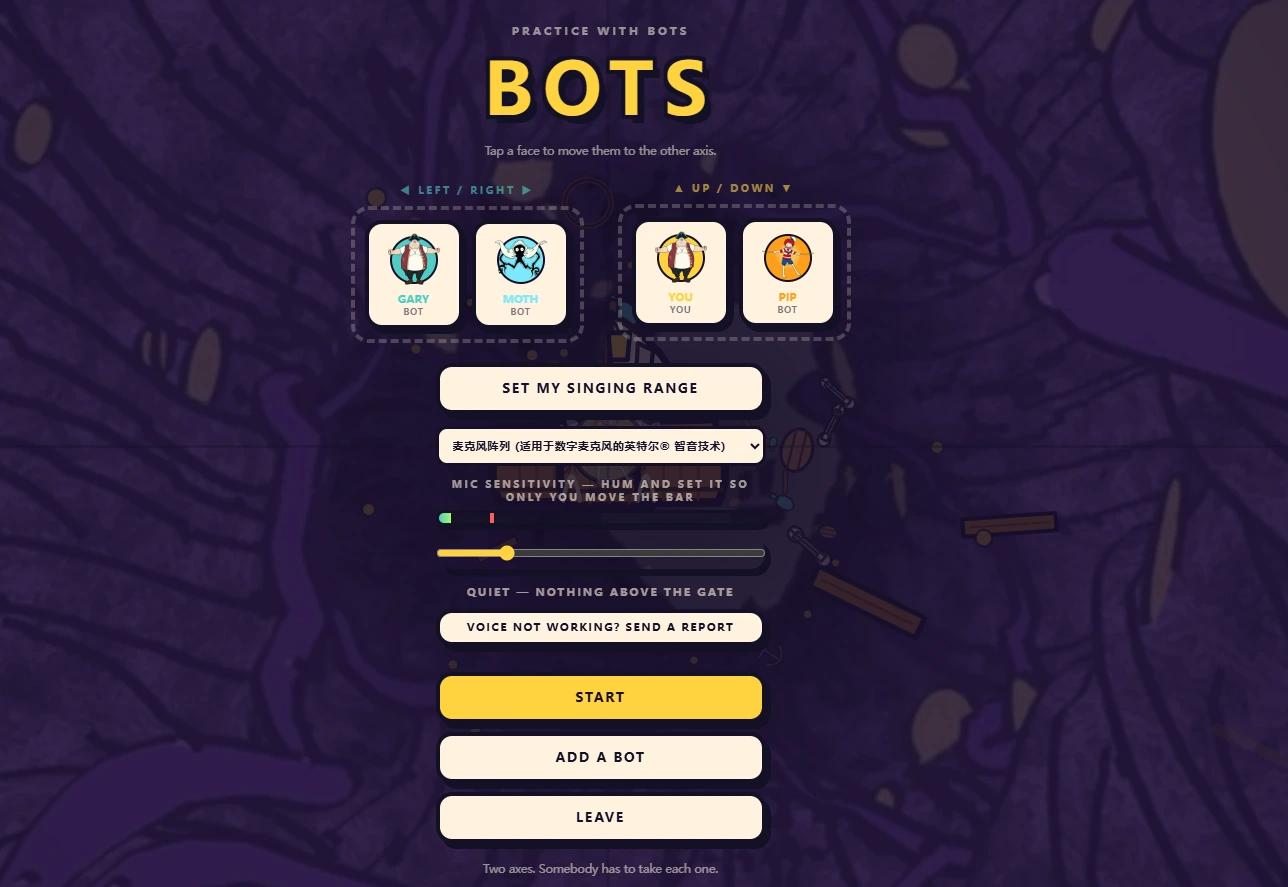
Observe horizontal and vertical steering are separated between singers, so individual accuracy cannot replace a shared plan, then connect the response to the sound and decision that produced it.

Voice co-op / Shared ship
Split the wheel between voices, hum high and low notes, and guide one fragile ship through openings that require two axes to agree at the right moment.













New attraction / 01
Sea Shanty Disaster asks the microphone to do real mechanical work. Permission, calibration, room noise, and timing therefore matter as much as the visible objective.
This Fun House guide keeps the game first, follows it with local evidence, and develops a safe repeatable method. Videos remain empty until accurate links are supplied.
01 / Booth noteObserve horizontal and vertical steering are separated between singers, so individual accuracy cannot replace a shared plan, then connect the response to the sound and decision that produced it.
 02 / Booth note
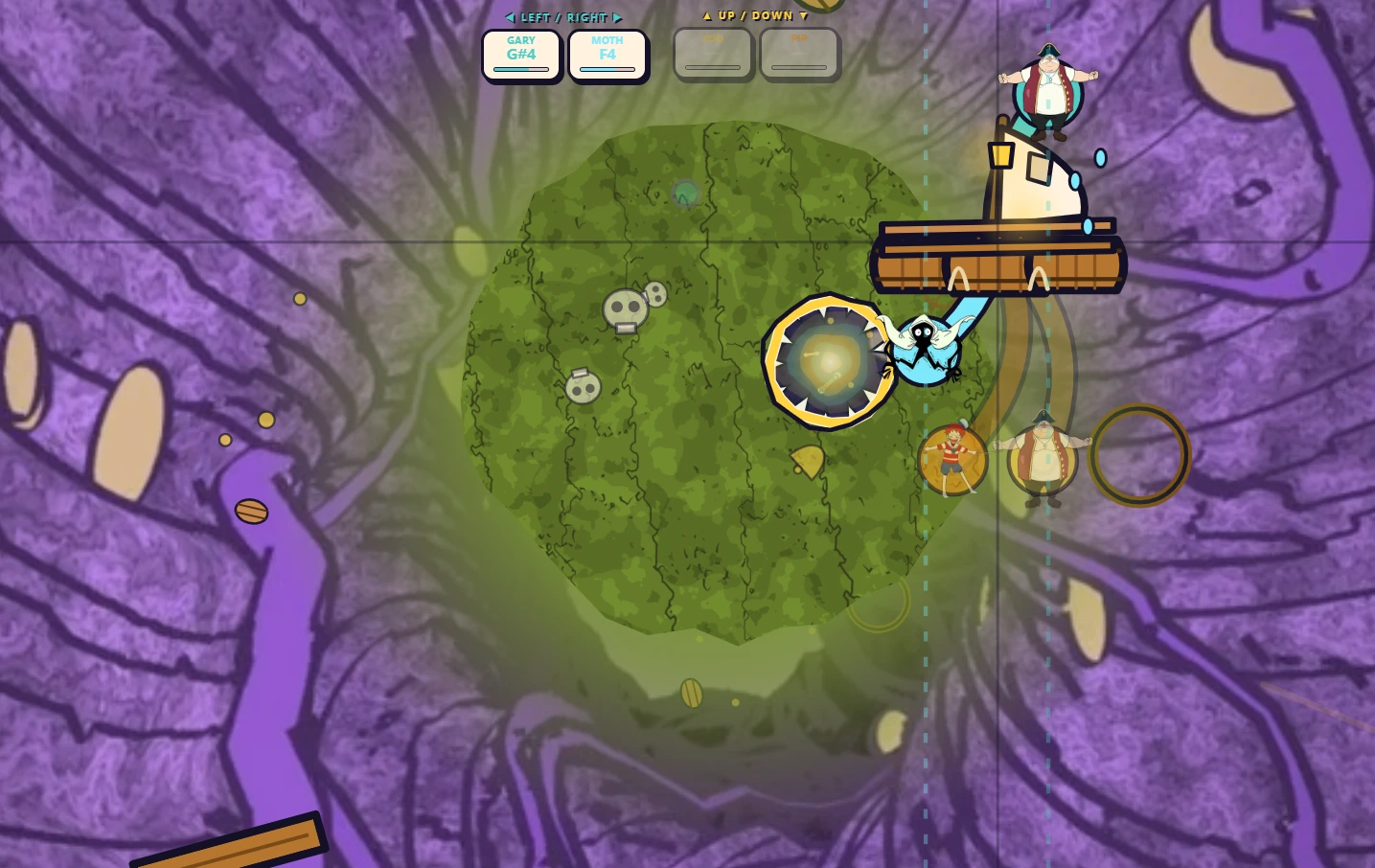
Observe comfortable high and low notes define the controls before the tunnel begins moving, then connect the response to the sound and decision that produced it.
 03 / Booth note
Observe both axes must reach one point together rather than completing unrelated corrections, then connect the response to the sound and decision that produced it.
04 / Booth noteObserve stable humming produces more readable direction than nervous slides across a pitch boundary, then connect the response to the sound and decision that produced it.
Attraction gallery / 02
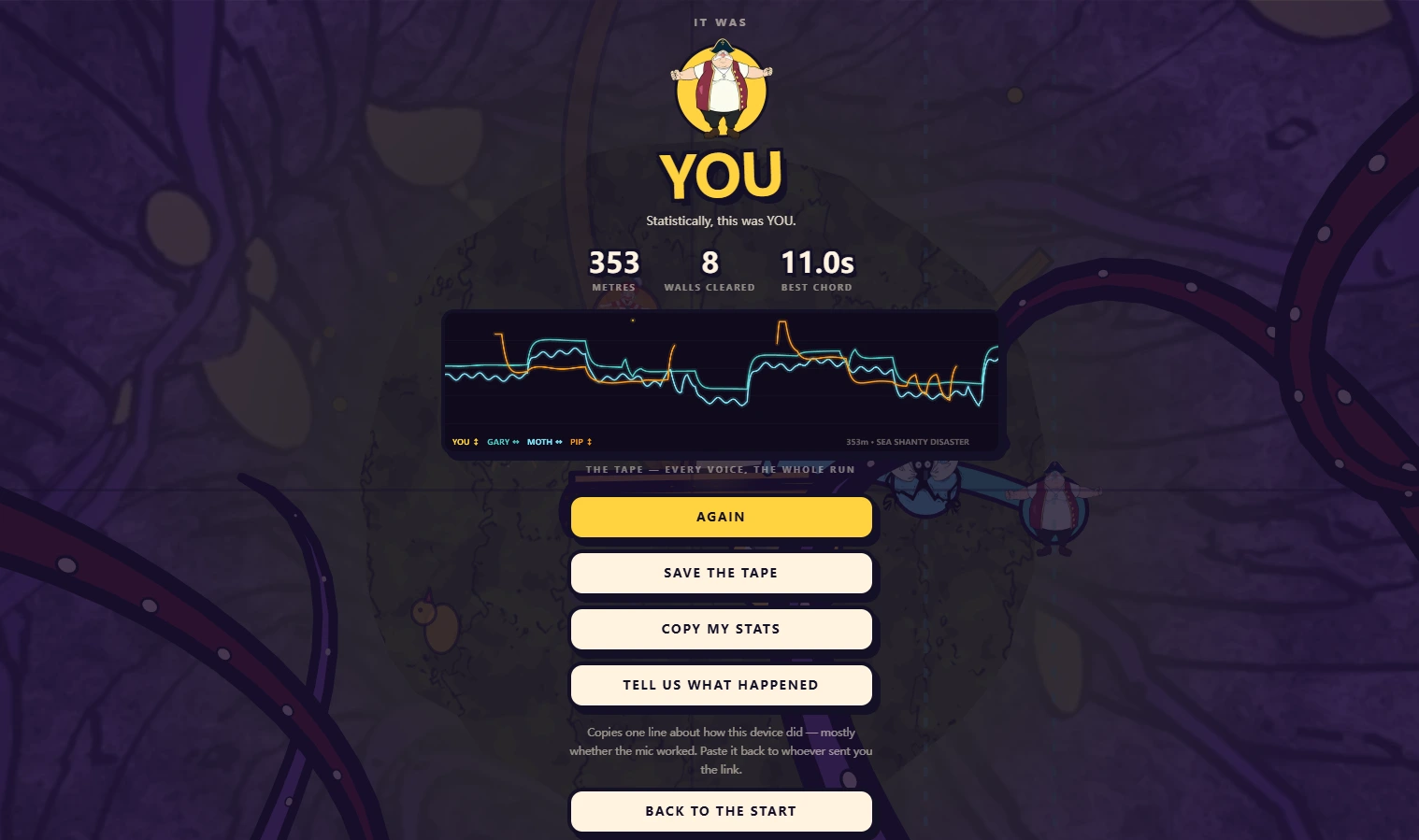
Local screenshots preserve the interface, characters, and feedback needed to understand each run.
Operator handbook / 03
Sea Shanty Disaster builds its challenge around horizontal and vertical steering are separated between singers, so individual accuracy cannot replace a shared plan. The first run should feel like opening an unfamiliar midway machine, not sitting an exam. Identify what the interface measures, how quickly it reacts, and which display confirms success before chasing a score. Sound is the control, but setup decides whether that control is readable. A stable device, a quiet room, and a comfortable performance create better evidence than one frantic result that cannot be explained or safely repeated. Give the game time to establish a baseline before changing distance, pitch, volume, or team instructions.
The booth operator's practical rule is to assign roles before launch and use one short call to identify the next opening. Keep every other condition steady while testing that adjustment, and repeat a good outcome before adding another change. After a failure, look for the earliest mismatch between the plan and the visible response instead of staring only at the final crash or defeat. This converts a short run into useful rehearsal. It also prevents players from becoming louder whenever the real problem is calibration, speaker feedback, uncertain timing, breath noise, or two people sending conflicting instructions through one microphone. Better diagnosis usually produces cleaner control with less effort.
Frankie's Fun House presents the game as a live attraction where comedy and precision share a stage. The lights invite exaggeration, yet the mechanism rewards clarity. Use headphones, hold the microphone at a consistent angle, and agree before recording or sharing anyone's voice. Rest between repeated attempts and never make discomfort part of the challenge. Once an opening routine becomes dependable, preserve it like a successful show cue and experiment only with the unfamiliar section. Improvement remains visible without removing the surprise that makes a voice-controlled browser game worth replaying with another crew or performer.
This microphone attraction builds its challenge around comfortable high and low notes define the controls before the tunnel begins moving. The first run should feel like opening an unfamiliar midway machine, not sitting an exam. Identify what the interface measures, how quickly it reacts, and which display confirms success before chasing a score. Sound is the control, but setup decides whether that control is readable. A stable device, a quiet room, and a comfortable performance create better evidence than one frantic result that cannot be explained or safely repeated. Give the game time to establish a baseline before changing distance, pitch, volume, or team instructions.
The booth operator's practical rule is to sing repeatable notes instead of stretching toward a range that disappears under pressure. Keep every other condition steady while testing that adjustment, and repeat a good outcome before adding another change. After a failure, look for the earliest mismatch between the plan and the visible response instead of staring only at the final crash or defeat. This converts a short run into useful rehearsal. It also prevents players from becoming louder whenever the real problem is calibration, speaker feedback, uncertain timing, breath noise, or two people sending conflicting instructions through one microphone. Better diagnosis usually produces cleaner control with less effort.
Frankie's Fun House presents the game as a live attraction where comedy and precision share a stage. The lights invite exaggeration, yet the mechanism rewards clarity. Use headphones, hold the microphone at a consistent angle, and agree before recording or sharing anyone's voice. Rest between repeated attempts and never make discomfort part of the challenge. Once an opening routine becomes dependable, preserve it like a successful show cue and experiment only with the unfamiliar section. Improvement remains visible without removing the surprise that makes a voice-controlled browser game worth replaying with another crew or performer.
This microphone attraction builds its challenge around both axes must reach one point together rather than completing unrelated corrections. The first run should feel like opening an unfamiliar midway machine, not sitting an exam. Identify what the interface measures, how quickly it reacts, and which display confirms success before chasing a score. Sound is the control, but setup decides whether that control is readable. A stable device, a quiet room, and a comfortable performance create better evidence than one frantic result that cannot be explained or safely repeated. Give the game time to establish a baseline before changing distance, pitch, volume, or team instructions.
The booth operator's practical rule is to look ahead, name the meeting point, and begin the slower axis early. Keep every other condition steady while testing that adjustment, and repeat a good outcome before adding another change. After a failure, look for the earliest mismatch between the plan and the visible response instead of staring only at the final crash or defeat. This converts a short run into useful rehearsal. It also prevents players from becoming louder whenever the real problem is calibration, speaker feedback, uncertain timing, breath noise, or two people sending conflicting instructions through one microphone. Better diagnosis usually produces cleaner control with less effort.
Frankie's Fun House presents the game as a live attraction where comedy and precision share a stage. The lights invite exaggeration, yet the mechanism rewards clarity. Use headphones, hold the microphone at a consistent angle, and agree before recording or sharing anyone's voice. Rest between repeated attempts and never make discomfort part of the challenge. Once an opening routine becomes dependable, preserve it like a successful show cue and experiment only with the unfamiliar section. Improvement remains visible without removing the surprise that makes a voice-controlled browser game worth replaying with another crew or performer.
This microphone attraction builds its challenge around stable humming produces more readable direction than nervous slides across a pitch boundary. The first run should feel like opening an unfamiliar midway machine, not sitting an exam. Identify what the interface measures, how quickly it reacts, and which display confirms success before chasing a score. Sound is the control, but setup decides whether that control is readable. A stable device, a quiet room, and a comfortable performance create better evidence than one frantic result that cannot be explained or safely repeated. Give the game time to establish a baseline before changing distance, pitch, volume, or team instructions.
The booth operator's practical rule is to enter one pitch zone clearly, hold it long enough to confirm movement, and release before correcting. Keep every other condition steady while testing that adjustment, and repeat a good outcome before adding another change. After a failure, look for the earliest mismatch between the plan and the visible response instead of staring only at the final crash or defeat. This converts a short run into useful rehearsal. It also prevents players from becoming louder whenever the real problem is calibration, speaker feedback, uncertain timing, breath noise, or two people sending conflicting instructions through one microphone. Better diagnosis usually produces cleaner control with less effort.
Frankie's Fun House presents the game as a live attraction where comedy and precision share a stage. The lights invite exaggeration, yet the mechanism rewards clarity. Use headphones, hold the microphone at a consistent angle, and agree before recording or sharing anyone's voice. Rest between repeated attempts and never make discomfort part of the challenge. Once an opening routine becomes dependable, preserve it like a successful show cue and experiment only with the unfamiliar section. Improvement remains visible without removing the surprise that makes a voice-controlled browser game worth replaying with another crew or performer.
This microphone attraction builds its challenge around speakers, spectators, and overlapping instructions may enter the same microphone used for steering. The first run should feel like opening an unfamiliar midway machine, not sitting an exam. Identify what the interface measures, how quickly it reacts, and which display confirms success before chasing a score. Sound is the control, but setup decides whether that control is readable. A stable device, a quiet room, and a comfortable performance create better evidence than one frantic result that cannot be explained or safely repeated. Give the game time to establish a baseline before changing distance, pitch, volume, or team instructions.
The booth operator's practical rule is to wear headphones and reserve active humming for the assigned crew. Keep every other condition steady while testing that adjustment, and repeat a good outcome before adding another change. After a failure, look for the earliest mismatch between the plan and the visible response instead of staring only at the final crash or defeat. This converts a short run into useful rehearsal. It also prevents players from becoming louder whenever the real problem is calibration, speaker feedback, uncertain timing, breath noise, or two people sending conflicting instructions through one microphone. Better diagnosis usually produces cleaner control with less effort.
Frankie's Fun House presents the game as a live attraction where comedy and precision share a stage. The lights invite exaggeration, yet the mechanism rewards clarity. Use headphones, hold the microphone at a consistent angle, and agree before recording or sharing anyone's voice. Rest between repeated attempts and never make discomfort part of the challenge. Once an opening routine becomes dependable, preserve it like a successful show cue and experiment only with the unfamiliar section. Improvement remains visible without removing the surprise that makes a voice-controlled browser game worth replaying with another crew or performer.
This microphone attraction builds its challenge around the collision reveals whether timing, axis choice, or communication failed first. The first run should feel like opening an unfamiliar midway machine, not sitting an exam. Identify what the interface measures, how quickly it reacts, and which display confirms success before chasing a score. Sound is the control, but setup decides whether that control is readable. A stable device, a quiet room, and a comfortable performance create better evidence than one frantic result that cannot be explained or safely repeated. Give the game time to establish a baseline before changing distance, pitch, volume, or team instructions.
The booth operator's practical rule is to identify the earliest excessive correction and preserve everything that worked before it. Keep every other condition steady while testing that adjustment, and repeat a good outcome before adding another change. After a failure, look for the earliest mismatch between the plan and the visible response instead of staring only at the final crash or defeat. This converts a short run into useful rehearsal. It also prevents players from becoming louder whenever the real problem is calibration, speaker feedback, uncertain timing, breath noise, or two people sending conflicting instructions through one microphone. Better diagnosis usually produces cleaner control with less effort.
Frankie's Fun House presents the game as a live attraction where comedy and precision share a stage. The lights invite exaggeration, yet the mechanism rewards clarity. Use headphones, hold the microphone at a consistent angle, and agree before recording or sharing anyone's voice. Rest between repeated attempts and never make discomfort part of the challenge. Once an opening routine becomes dependable, preserve it like a successful show cue and experiment only with the unfamiliar section. Improvement remains visible without removing the surprise that makes a voice-controlled browser game worth replaying with another crew or performer.
This microphone attraction builds its challenge around players make better calls after experiencing both horizontal and vertical jobs. The first run should feel like opening an unfamiliar midway machine, not sitting an exam. Identify what the interface measures, how quickly it reacts, and which display confirms success before chasing a score. Sound is the control, but setup decides whether that control is readable. A stable device, a quiet room, and a comfortable performance create better evidence than one frantic result that cannot be explained or safely repeated. Give the game time to establish a baseline before changing distance, pitch, volume, or team instructions.
The booth operator's practical rule is to practice each axis separately and rotate positions instead of blaming one specialist. Keep every other condition steady while testing that adjustment, and repeat a good outcome before adding another change. After a failure, look for the earliest mismatch between the plan and the visible response instead of staring only at the final crash or defeat. This converts a short run into useful rehearsal. It also prevents players from becoming louder whenever the real problem is calibration, speaker feedback, uncertain timing, breath noise, or two people sending conflicting instructions through one microphone. Better diagnosis usually produces cleaner control with less effort.
Frankie's Fun House presents the game as a live attraction where comedy and precision share a stage. The lights invite exaggeration, yet the mechanism rewards clarity. Use headphones, hold the microphone at a consistent angle, and agree before recording or sharing anyone's voice. Rest between repeated attempts and never make discomfort part of the challenge. Once an opening routine becomes dependable, preserve it like a successful show cue and experiment only with the unfamiliar section. Improvement remains visible without removing the surprise that makes a voice-controlled browser game worth replaying with another crew or performer.
This microphone attraction builds its challenge around short failures can create laughter without turning the next attempt into louder input. The first run should feel like opening an unfamiliar midway machine, not sitting an exam. Identify what the interface measures, how quickly it reacts, and which display confirms success before chasing a score. Sound is the control, but setup decides whether that control is readable. A stable device, a quiet room, and a comfortable performance create better evidence than one frantic result that cannot be explained or safely repeated. Give the game time to establish a baseline before changing distance, pitch, volume, or team instructions.
The booth operator's practical rule is to pause after a crash, restate the plan, and restart when every singer understands the experiment. Keep every other condition steady while testing that adjustment, and repeat a good outcome before adding another change. After a failure, look for the earliest mismatch between the plan and the visible response instead of staring only at the final crash or defeat. This converts a short run into useful rehearsal. It also prevents players from becoming louder whenever the real problem is calibration, speaker feedback, uncertain timing, breath noise, or two people sending conflicting instructions through one microphone. Better diagnosis usually produces cleaner control with less effort.
Frankie's Fun House presents the game as a live attraction where comedy and precision share a stage. The lights invite exaggeration, yet the mechanism rewards clarity. Use headphones, hold the microphone at a consistent angle, and agree before recording or sharing anyone's voice. Rest between repeated attempts and never make discomfort part of the challenge. Once an opening routine becomes dependable, preserve it like a successful show cue and experiment only with the unfamiliar section. Improvement remains visible without removing the surprise that makes a voice-controlled browser game worth replaying with another crew or performer.
Questions and answers / 04
Browser access, safe input, cooperative setup, troubleshooting, mobile play, and video availability.
Yes. Launch the embedded browser build and grant microphone permission when requested.
High and low notes select directions, with horizontal and vertical axes divided between crew roles.
No. Comfortable pitch zones and communication matter more than musical training.
They stop music and other voices from returning through speakers and confusing the input.
Practice options can help one player understand the roles before a group session.
Recheck calibration, microphone selection, room noise, speaker feedback, and overlapping voices.
A current mobile browser may work, but microphone and fullscreen behavior vary.
No accurate video links were supplied, so videos will be added in a later update.
No. This is an independent page with an embedded game and original cooperative guide.