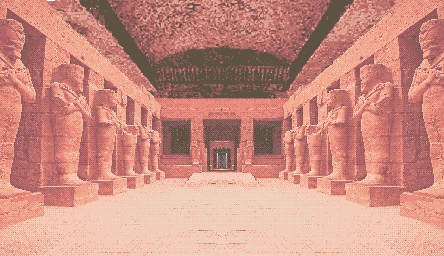
 01 / Enter
Step beneath the columns.
The excavation framing leads from a quiet ruin toward compact mechanical chambers.

Free online / Pixel-art puzzle
Rotate the chamber, guide matching colored orbs together, and clear eighteen compact puzzle rooms inside a stylized fantasy temple.
















Expedition ticket / 01
Temple of the Jackal is a short adult pixel-art puzzle game about changing gravity through ninety-degree room rotations. Each chamber asks you to bring matching colored orbs together, remove every set, and open the route toward the next stage.
This page preserves the Frankie's Fun House player, navigation, cards, share control, fullscreen behavior, videos, and editorial layout while giving the visiting game its own temple artwork and square canvas. The game loads only after an adult visitor confirms their age and chooses to enter.
01 / EnterThe excavation framing leads from a quiet ruin toward compact mechanical chambers.
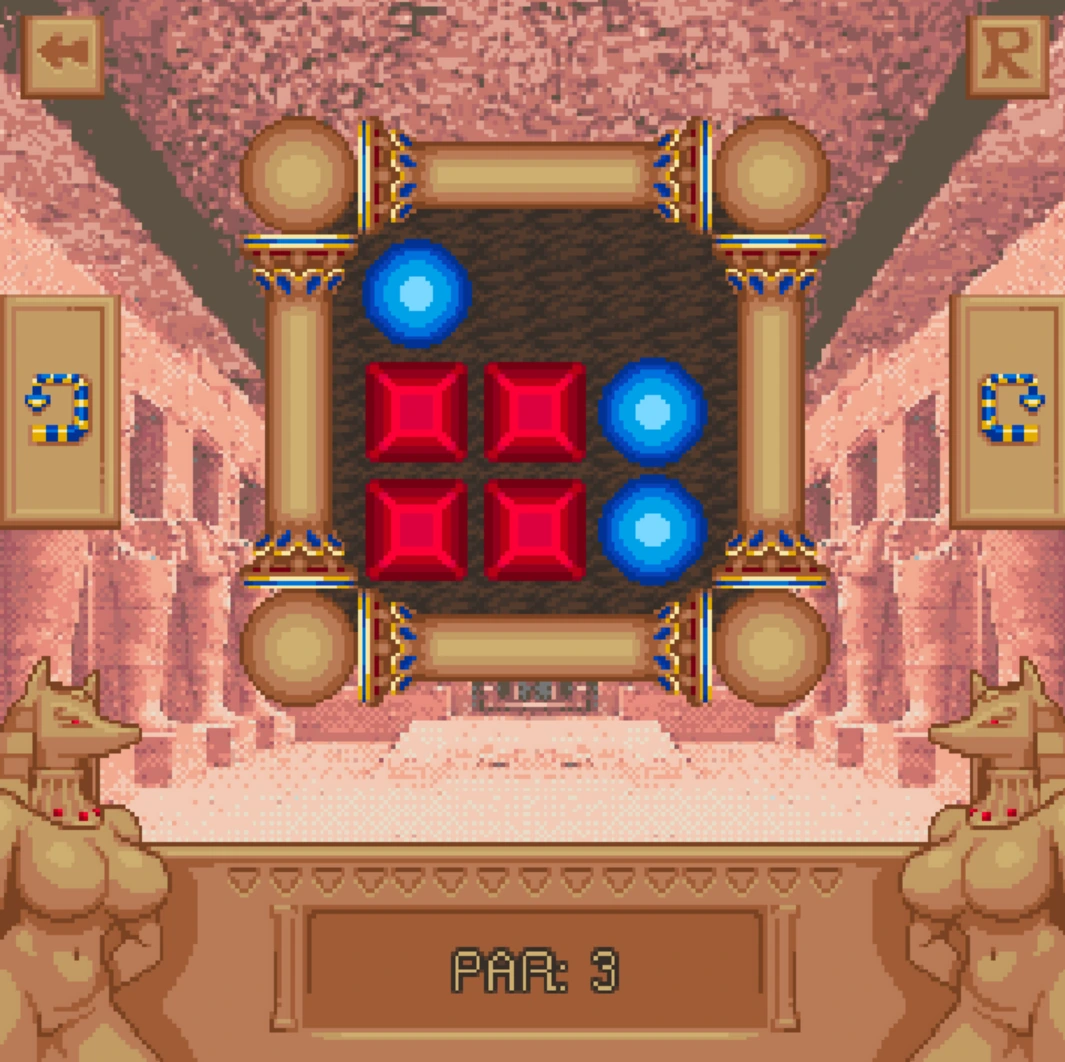 02 / Read
Every visible orb and ledge helps predict the board after gravity changes.
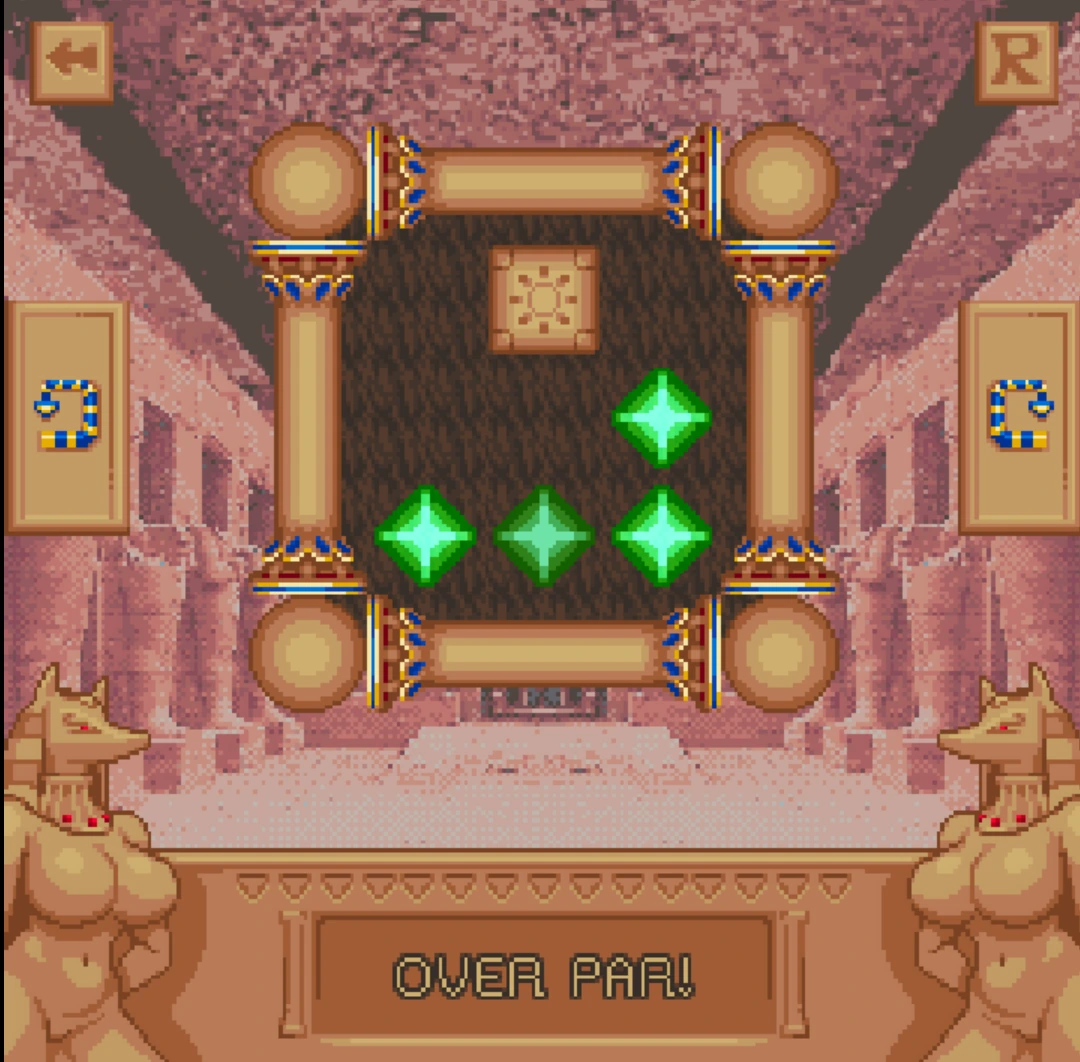 03 / Rotate
A quarter turn transforms floors into walls and opens new routes through the room.
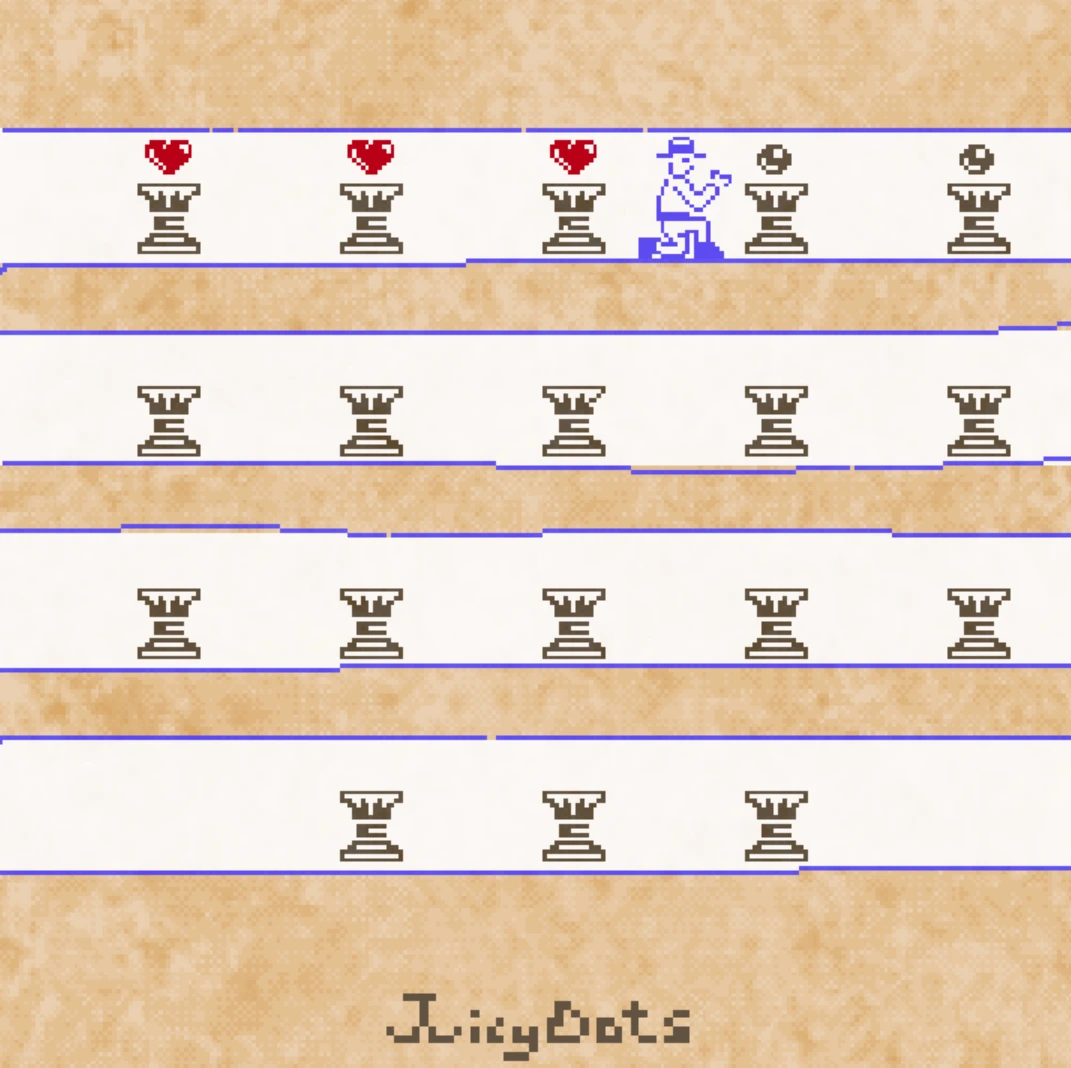 04 / Advance
Cleared chambers mark a concise route toward the game's later adult material.
Chamber gallery / 02
Actual images from the supplied game show the square board, rotation controls, and room progression.
Screening chamber / 03
Watch the chamber settle after each rotation, then return to the game frame and plan the sequence yourself.
See how ninety-degree rotation redirects gravity and brings matching colors into contact.
Follow another run through the pixel-art temple and compare the order of its turns.
The chamber guide / 04
Temple of the Jackal builds its main game around a compact square chamber. Colored orbs sit between ledges and walls, while a control on either side lets you rotate the entire room by ninety degrees. Gravity then takes over. Every loose piece falls in the new downward direction, and matching colors disappear when they meet. The immediate objective is to remove every orb, yet the interesting decision is not simply which button to press. A useful turn changes several positions at once, so the player must imagine the whole board after the rotation rather than follow a single color.
The first rooms establish that visual grammar without burying it under extra systems. Color identifies relationships, platforms determine stopping points, and the chamber boundary explains where an orb can travel. Once those ideas are familiar, the layouts become less forgiving. A turn that joins one pair can isolate another, while a tempting direct match may leave the final colors on opposite sides of an awkward shelf. Because the information is visible before each move, mistakes usually feel like a planning problem instead of a hidden rule.
Approach a new room by naming every color and counting its possible partners. Then inspect the ledges that would catch each orb after a left turn and after a right turn. You do not need to calculate the entire solution immediately. Look for a rotation that creates a useful grouping without closing the only route for a second pair. That habit turns the board from a chaotic box of falling pieces into a short sequence of predictable states.
Many puzzle games move one object at a time. Here, rotating the chamber effectively rewrites what down means for every movable piece. The same horizontal platform can become a wall, a wall can become a floor, and an apparently trapped orb can gain a clear path after a quarter turn. This is why judging the current picture alone is misleading. The active puzzle is the relationship between the present layout and the next gravity direction.
A practical technique is to trace each orb until it reaches the first solid surface. Do this once for a left rotation and once for a right rotation before clicking. If two matching colors land on the same uninterrupted path, the move may remove them. If they stop on different ledges, ask whether that separation creates a better position for the following turn. The best move is not always the one that produces an immediate match; sometimes it is the turn that arranges three later contacts while keeping every color mobile.
When a sequence fails, reset and change the earliest questionable decision instead of replaying the same motions faster. The game can display a par target, but efficiency is easier to pursue after you understand a safe solution. Clear the room first, notice which turn did little useful work, and then replay with one fewer detour. This keeps experimentation readable and makes improvement feel earned rather than accidental.
The supplied build organizes its main route around eighteen puzzle rooms. That count gives the experience a defined arc without turning it into a long campaign. Early chambers introduce rotation and matching, middle layouts demand more careful ordering, and later rooms expect the player to recognize how several colors will move together. Progress is represented as a journey deeper into the temple, giving a simple mechanical sequence the feeling of an excavation.
Short stages suit this design because each room can focus on one arrangement. You can enter, study the color pattern, test a plan, and either clear or reset it without losing a long chain of unrelated actions. The compact format also makes Temple of the Jackal comfortable to revisit. Returning players do not need to remember a large inventory or a branching quest log; they need only recover the board language and continue from the next available chamber.
Completion and mastery are separate goals. Reaching the next room confirms that the puzzle is solved, while beating or matching an efficient move count invites a more deliberate replay. Players who prefer a relaxed route can advance without treating every board as a score attack. Players who enjoy optimization can return to completed layouts, compare left-first and right-first plans, and search for a cleaner sequence after the pressure of initial progress is gone.
Temple of the Jackal was designed around a very small original canvas. The limited resolution is not a defect that this portal tries to smooth away. Broad shapes, clear colors, heavy outlines, and a restrained palette make the chamber readable at a glance. Enlarging the canvas with crisp edges preserves the intended pixel-art character, while fullscreen gives the board more physical presence without inventing detail that the source art never contained.
The surrounding fantasy temple uses warm stone, deep shadow, ornamental columns, and jackal imagery to frame the mechanical rooms. It borrows a pulp-adventure idea of an Egyptian excavation rather than presenting a historical or religious reconstruction. That distinction matters: the setting is a stylized fantasy stage for the puzzle and adult story material, not an educational account of ancient Egyptian belief or archaeology.
On FrankiesFunHouse.org, the page keeps its own night-blue carnival shell while treating the Temple artwork as a visiting attraction. Gold borders and ticket-like labels connect it to the shared site, whereas the rose-toned cover, gem colors, and local screenshots preserve the game identity. The result is consistent navigation without forcing the game into Frankie's office-and-fun-house imagery.
The later unlockable story material includes explicit sexual content and nudity. For that reason, this page requires visitors to confirm that they are at least eighteen years old before the embedded game is loaded. The public card, navigation, and surrounding guide use non-explicit artwork, but the confirmation is not a promise that the complete game remains suitable for a general audience. Anyone who does not want adult fantasy content should leave the player unopened.
The age confirmation also supports deferred loading. Before the visitor chooses to enter, the page displays a local cover and text rather than downloading the remote game package. Only after confirmation and a deliberate button press does the iframe connect to the dedicated Temple of the Jackal game host. This is both a content boundary and a performance feature: ordinary visitors do not spend bandwidth compiling a game they never intended to launch.
This portal is an unofficial fan-made guide and launch point. It does not claim ownership of the game, its characters, its artwork, or its adult scenes. The warning describes the supplied build as accurately as possible so visitors can make an informed choice. It should not be interpreted as an endorsement of every theme, and it does not replace the laws or age requirements that apply where a visitor lives.
After selecting Enter the Temple, allow the browser a moment to fetch and initialize the remote game. A web build loads an HTML shell, JavaScript support code, WebAssembly, and project data. A dark canvas during the first seconds can mean the engine is still starting rather than that the page has failed. Repeated refreshing usually makes diagnosis harder, so wait for the initial request to finish before trying again.
Click once inside the canvas if the controls do not respond or the audio remains silent. Modern browsers restrict automatic sound until a user gesture, and an iframe must receive focus before it can reliably process pointer or keyboard input. Use the page's fullscreen control when you want the square board enlarged. Press Escape to return to the guide. If the frame stays blank, test a current Chrome, Edge, or Firefox release and temporarily check whether a strict privacy extension or network filter is blocking the game subdomain.
Puzzle progress may rely on browser-managed storage. Use a normal browsing window and return with the same browser profile if you want the best chance of keeping completed rooms. Private mode, storage cleanup tools, changing devices, or clearing site data can remove local progress. The manual checklist shown on the reference project is separate from the game save; this page does not claim that a checked or visible state is synchronized with the embedded build.
The page itself adapts to phones, tablets, and desktop screens, but the original game uses a compact square interface with precise pointer targets. A mouse on desktop is the most reliable setup. A tablet or larger phone can still display the board, especially in landscape orientation, although taps near browser edges may compete with operating-system gestures. If a touch seems ignored, tap the center of the canvas first to focus the embedded game.
The player preserves a square aspect ratio rather than stretching the game into the wide frame used by Frankie's Fun House. Empty space around the square is intentional and helps avoid distorted pixels. On fullscreen-capable devices, the surrounding player can expand while the game remains centered. This respects both the target site's layout and the source game's original proportions.
For a stable session, close memory-heavy tabs and let the first load complete. WebAssembly games consume more memory than the surrounding guide, and mobile browsers can discard a tab under pressure. If the browser reloads unexpectedly, reopen the page, confirm the age gate again, and check whether progress remained in local storage. The website cannot guarantee how each device manages memory, audio, or persistent data.
When a chamber feels impossible, pause before pressing another direction. List the unmatched colors, identify the surfaces that currently support them, and imagine the next resting point in both directions. Eliminate any move that permanently divides the only remaining pair. Then choose the turn that preserves the greatest number of future paths. This short routine is slower than guessing for one second but much faster than repeating an unreadable chain of mistakes.
It also helps to work backward from a desired contact. If two blue orbs must meet on a particular floor, ask what orientation makes that surface horizontal and whether both orbs can reach it without another ledge intervening. The required previous position often becomes obvious. Once one pair is removed, recalculate; disappearing pieces can open routes or change which landing sequence is safe.
Use the two gameplay videos below as visual references for the rhythm of rotation and progression, not as a substitute for every decision. Watching how the board settles can make the gravity rule easier to understand. Then return to the live frame and test your own plan. The strongest satisfaction comes from predicting the fall, seeing the colors meet, and knowing why the chamber cleared.
Questions and answers / 05
Practical answers about age, browser play, rotation, rooms, saves, loading, and device support.
Yes. Confirm that you are at least 18, then select Enter the Temple to load the browser build from the dedicated Temple of the Jackal game host.
The embedded browser build can be launched through this portal without an account, installer, or site subscription.
The game includes unlockable explicit sexual content and nudity. It is intended only for adults aged 18 or older.
It is a compact pixel-art color-matching game. Rotate a square chamber left or right, let gravity move the orbs, and bring matching colors together until the board is clear.
The supplied build contains eighteen main puzzle rooms, with later adult story material tied to progress.
Use the direction controls beside the board to rotate the chamber. Click inside the iframe first if it has not received focus, and use the reset option when a sequence traps the remaining colors.
The original game was designed around a compact square canvas. The page preserves that proportion so the pixel art and pointer targets are not stretched.
The website is responsive, but a desktop mouse or a tablet in landscape orientation is more comfortable for the game's precise square interface.
Wait for the first load, click inside the canvas, and check whether a browser extension or network is blocking s.templeofthejackal.com. Browsers often require a click before audio starts.
Progress may use browser storage. Stay in the same non-private browser profile and avoid clearing site data, but storage behavior cannot be guaranteed across devices or browser settings.